2026-08-06 · David Harlan
Garage Door Maintenance Tips for Houston's Humid Climate
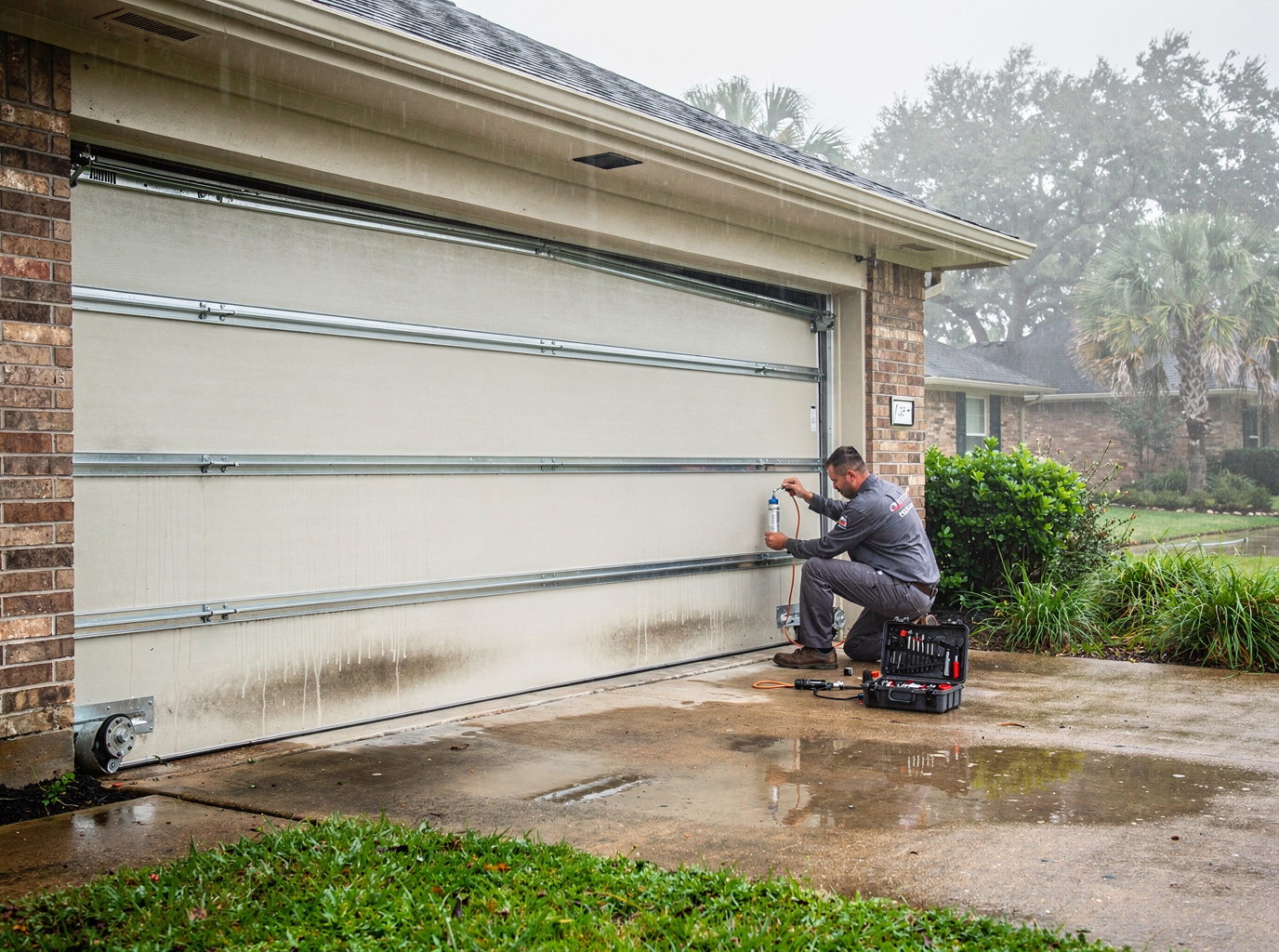
Houston's high humidity shortens garage door lifespan by promoting rust on tracks, rollers, and springs within 3–5 years if left unchecked. Owners who perform seasonal inspections and targeted lubrication every 4–6 months see fewer emergency calls and maintain smooth operation even during peak summer moisture levels. Focus on corrosion prevention, proper lubrication, and seal integrity to counter the constant damp air that settles in the Texas Gulf Coast region.
Humidity's Effect on Metal Components
Constant moisture in Houston air causes steel tracks and hinges to oxidize faster than in drier parts of Texas. Surface rust appears first on lower sections near the ground where condensation pools overnight. Over 12–18 months this pitting weakens roller brackets and can lead to binding that strains the opener motor. Check for orange-brown discoloration during monthly visual walks around the door. Wipe affected areas with a dry cloth and apply a thin rust-inhibiting spray rated for marine environments. In neighborhoods like the Energy Corridor, where industrial humidity combines with coastal air, doors facing east or west show accelerated wear on exposed hardware. Document any new spots with photos to track progression between inspections.
Cleaning and Drying Practices
Remove salt and dust buildup that traps moisture against the door surface. Use a soft-bristle brush and mild detergent solution once per quarter, then rinse and dry thoroughly with a microfiber towel. Pay special attention to the bottom weatherstrip and side seals where water collects. In the Port of Houston Area, airborne particles from nearby operations mix with humidity to create a gritty film that abrades paint. After cleaning, inspect the bottom edge for small dents that can become rust entry points. Avoid pressure washers that force water behind panels. Allow the door to air-dry completely before applying any protectant, especially on overcast days when evaporation slows.
Lubrication Schedule for Humid Conditions
Standard household oil fails quickly in Houston's moisture, so use a silicone or lithium-based lubricant formulated for high-humidity environments. Apply to rollers, hinges, and tracks every 4 months rather than the 6-month interval used inland. Wipe away old grease first to prevent it from trapping additional moisture. Springs and cables require a light coat only; excess product attracts dust. Commercial doors with 8–12 cycles daily need more frequent attention than residential units. Keep records of application dates to maintain consistency across multiple locations in Westchase or Sharpstown.
Spring and Cable Inspection
Humidity accelerates metal fatigue in torsion springs, shortening typical service life from 10–15 years to 7–10 years in coastal Texas. Listen for squeaking during operation and look for gaps between coils that signal weakening. Cables should show no fraying or rust at the drum attachment points. Replacement intervals vary by door weight and usage, so schedule professional evaluation before visible damage appears. Readers needing deeper guidance can review A Guide to Commercial Garage Door Spring Replacement for step-by-step identification of wear patterns common in local installations.
When to Schedule Professional Service
Annual professional tune-ups catch issues before they cause downtime. Technicians test spring tension, balance the door, and replace worn rollers during these visits. Houston building codes require certain safety features on commercial doors; technicians familiar with local standards ensure compliance during maintenance. Property managers in Downtown Houston often bundle these checks with the Preventive Maintenance Program to align service with peak humidity months. Business hours are Mon–Fri 8am–6pm and Sat 9am–2pm for scheduling. Early intervention prevents most full replacements and keeps doors functioning through the wettest seasons.